
Surgical scars and changes after breast surgery can linger long after healing feels complete. Medical tattooing offers a gentle way to restore balance through techniques like scar camouflage and areola restoration, designed to blend naturally with your skin. In this post, you’ll learn what these treatments involve, how they support confidence, and what to expect when you choose expert care in Kent or South Wales. For more information, visit this guide.
Understanding Medical Tattooing
Medical tattooing provides a way to restore confidence and natural appearance following surgery. It involves techniques that are tailored to meet each individual’s needs.
What is Medical Tattooing?
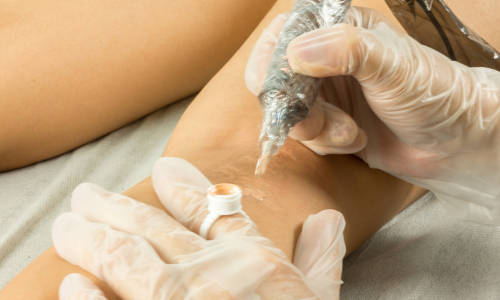
Medical tattooing, also known as paramedical tattooing, involves the use of pigments to improve the appearance of scars and areas affected by surgery. This procedure uses a specialised machine to deposit pigments under the skin, matching the tone and texture for a natural look. Clients experience minimal discomfort thanks to topical numbing creams used during the process.
Scar Camouflage Tattoo Techniques
Scar camouflage is a method designed to blend scars with the surrounding skin. Using pigments that match your natural skin tone, this technique reduces the visibility of scars from surgeries or injuries. Over a series of sessions, the pigments are carefully applied to create a uniform look that can dramatically change how scars are perceived.
Areola Restoration Processes
Areola restoration focuses on recreating the natural look of the nipple and areola. This process is particularly beneficial for those who have undergone breast surgery, including mastectomies. A 3D areola tattoo technique is often used to simulate natural textures and shading, providing a realistic and empowering result.
Benefits of Post-Surgery Tattooing
Post-surgery tattooing offers numerous benefits that go beyond aesthetics. It plays a crucial role in emotional recovery.
Boosting Confidence After Surgery
Feeling comfortable in your skin is vital for your self-esteem. Medical tattooing can significantly boost confidence by helping you feel more like yourself again. Many clients report a renewed sense of self-assurance after restoring their natural appearance.
Achieving Natural-Looking Results
The primary goal of post-surgery tattooing is to achieve results that look and feel natural. By using pigments matched to your skin tone, these tattoos blend seamlessly with your body, providing subtle enhancements that aren’t immediately noticeable to others.
Suitability and Personalised Plans
Every client’s needs are unique, and medical tattooing offers personalised plans to suit individual circumstances. A consultation will help determine the best approach, ensuring that the treatment aligns with your skin type and aesthetic goals.
Consultation and Maintenance
Understanding the consultation process and aftercare is essential to achieving optimal results from medical tattooing.
What to Expect in a Consultation
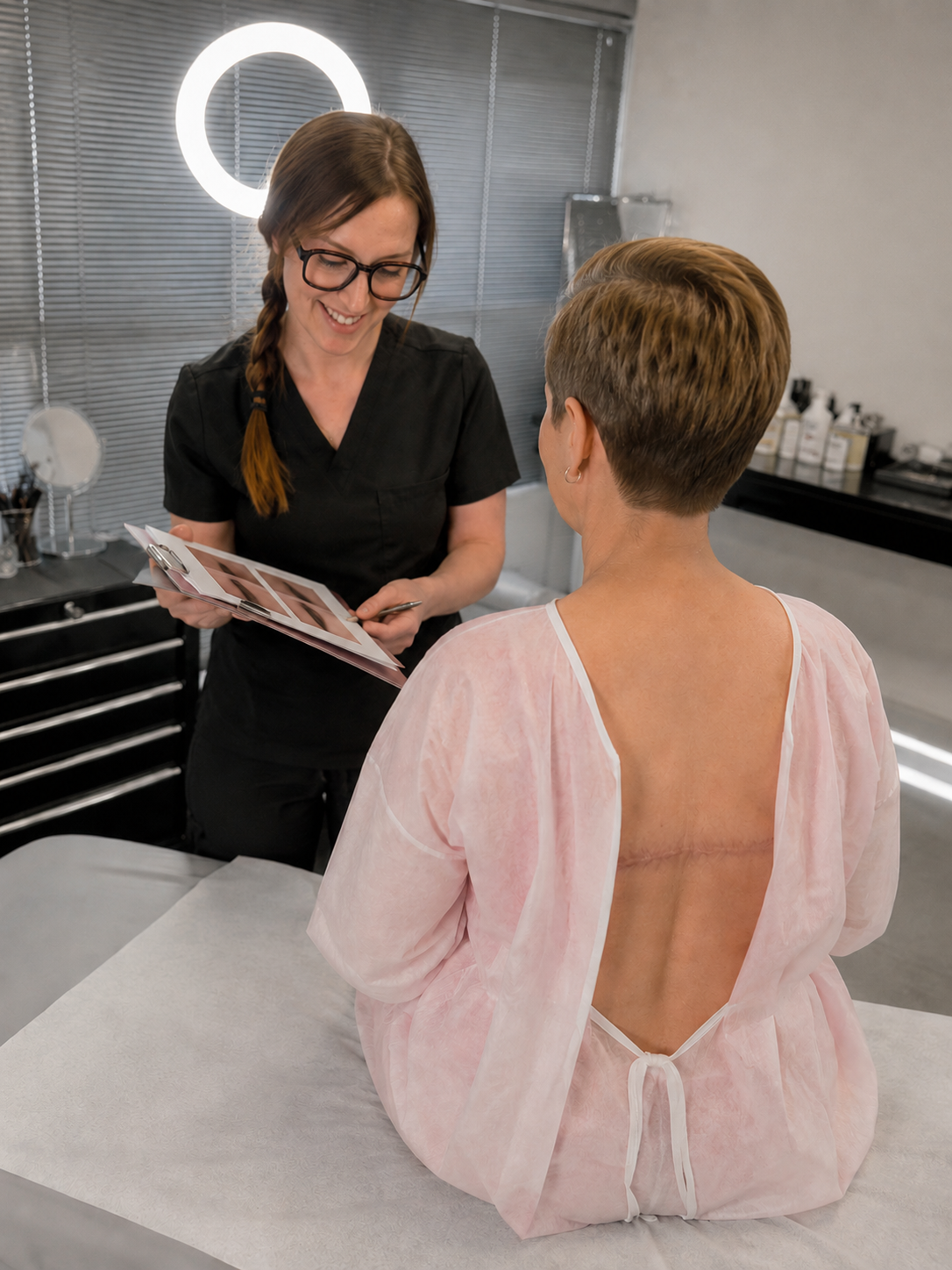
During a consultation, you will discuss your goals, concerns, and medical history with a specialist. This session allows the professional to assess your skin and provide advice on the most suitable techniques, creating a tailored plan for your needs.
Aftercare and Longevity of Results
Proper aftercare is crucial for maintaining your tattoo’s appearance. You should avoid sun exposure and refrain from swimming for the first two weeks after treatment. Most results last between two to four years, depending on skin type and care.
Booking a Private Consultation in Maidstone or Llanover
Booking a consultation at our Maidstone or Llanover clinics is a step towards restoring your confidence. Our experienced team is ready to guide you through your options, ensuring a care plan that respects your individuality and skin health.
Frequently Asked Questions
What is the purpose of medical tattooing?
Medical tattooing aims to enhance the appearance of scars and restore areas affected by surgery, helping individuals feel more confident and comfortable in their skin.
How long does medical tattooing last?
Results typically last between two to four years, depending on factors like skin type and aftercare. Regular maintenance can help extend the results.
Is the procedure painful?
A topical numbing cream is applied to minimise discomfort during the procedure, making it relatively painless for most clients.
Who is eligible for medical tattooing?
Eligibility depends on various factors, including skin type, medical history, and individual goals. A consultation is necessary to determine suitability.
How should I care for my tattoo after the procedure?
Aftercare involves keeping the area moisturised, avoiding sun exposure, and refraining from activities like swimming for the first two weeks.