
Laser wavelengths often feel like a secret code, but understanding them can make all the difference when considering tattoo removal or skin treatments. Different wavelengths target specific ink colours and skin concerns with precision, ensuring care tailored to your unique needs. In this guide, you’ll find laser wavelengths explained in plain English, helping you feel confident about what’s right for your skin and tattoo goals. For more insights, you can visit this resource.
Understanding Laser Wavelengths

Laser treatments can feel a bit overwhelming, but they’re truly fascinating once you know how they work. Let’s discover how lasers tackle tattoo colours and why depth matters for skin work.
How Lasers Target Tattoo Colours
Lasers are like targeted light beams that focus on specific colours. When you want to lighten a tattoo, the laser emits a particular wavelength that ink absorbs. This breaks the ink into tiny particles, which your body naturally clears away. It’s essential to use the right laser type because different inks respond differently. For instance, darker inks absorb more light and break down quicker, making them easier to treat. On the other hand, lighter inks might require a few more sessions. This table outlines our discussion in more detail.
Depths and Precision in Skin Work
When it comes to skin treatments, depth is key. Lasers penetrate varying skin layers to target specific issues, like pigmentation or veins. By adjusting the laser’s depth, we can ensure precision while keeping your skin safe. This precision allows for targeted treatment, reducing potential damage to surrounding areas. The right approach ensures your skin gets the gentle care it needs, resulting in a natural look.
Common Laser Wavelengths Explained
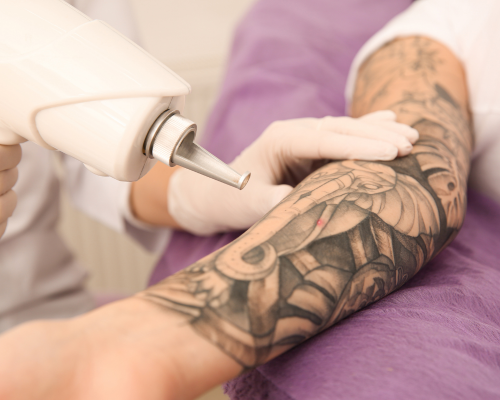
Understanding the wavelengths of lasers helps you know what to expect. Each wavelength has a specific purpose, and knowing this can make your treatment journey clearer.
1064 nm Laser for Black Ink
The 1064 nm laser is your go-to for black ink. Black inks absorb light efficiently, making this wavelength perfect for breaking them down. It works by emitting pulses that pass through your skin, focusing directly on the ink. This direct approach ensures minimal discomfort and effective results. If you’ve got a black tattoo you’re considering lightening, this laser might be just what you need.
532 nm Laser for Red/Orange Ink
Red and orange inks require a different approach, and the 532 nm laser is ideal. This laser targets the warmer pigments, breaking them down efficiently. Red ink often needs a few more sessions, but the results are worth it. With each session, you’ll notice the ink fading, as your body naturally clears the particles.
Alexandrite and Ruby for Blue/Green Pigments
Blue and green pigments can be stubborn. The Alexandrite and Ruby lasers, at 755 nm and 694 nm respectively, specifically target these colours. They work by focusing on the unique absorption properties of blue and green inks. While these pigments might need extra attention, the tailored approach ensures effective treatment.
Safe and Personalised Treatment
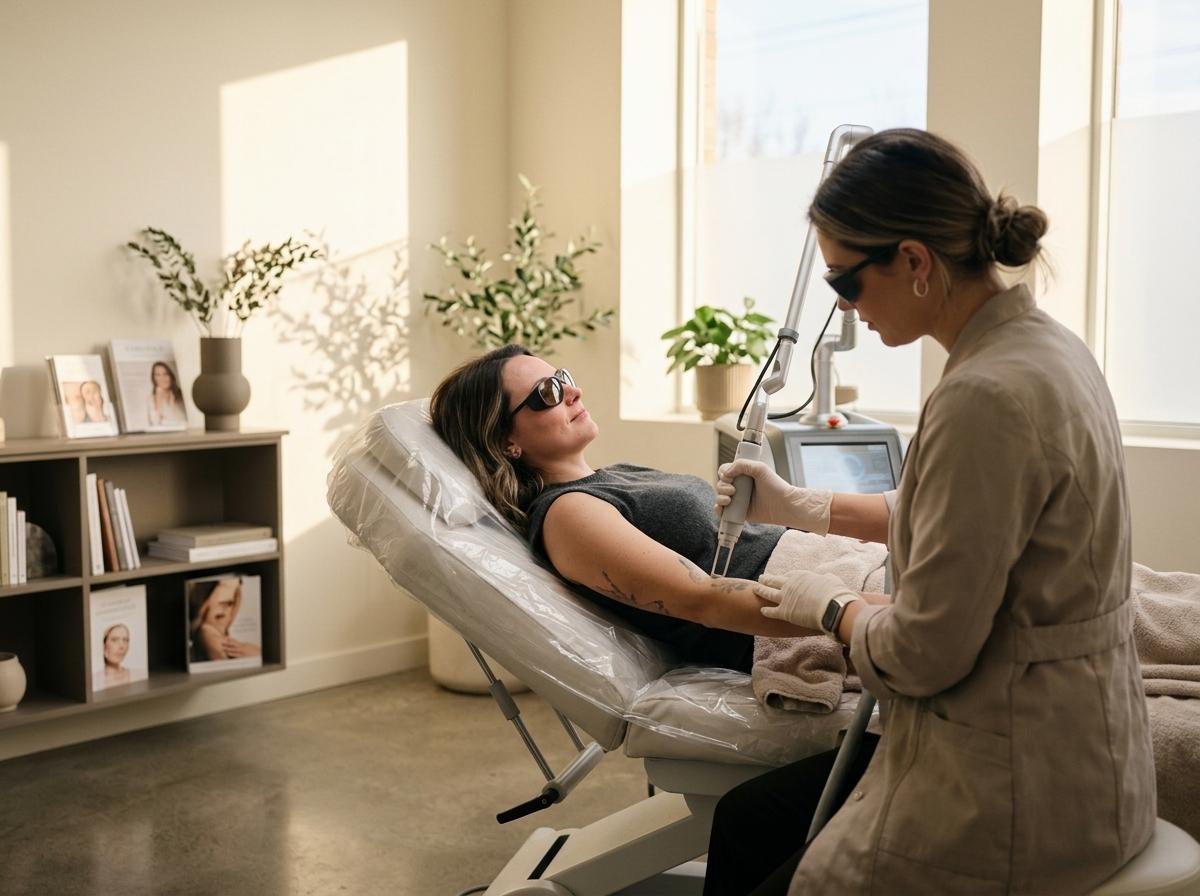
Your safety and comfort are our priorities. Here’s how we make sure each treatment is right for you.
Importance of Patch Testing
Patch testing is crucial before starting any laser treatment. It helps us understand how your skin reacts to the laser and ensures your safety. This step is about making sure your skin handles the treatment well, avoiding any unwanted reactions. If you want to learn more about the importance of patch testing, read this article.
Tailored Consultations at Our Clinics
Our clinics in Kent and South Wales offer personalised consultations. We take time to understand your needs and tailor treatments specifically for you. By discussing your goals and concerns, we ensure you’re comfortable and informed every step of the way. Your journey to feeling confident in your skin starts with understanding and care.
Frequently Asked Questions
How does laser tattoo removal work?
Laser tattoo removal uses focused light to break down ink particles in your skin. Different wavelengths target specific colours, which are then naturally cleared by your body over time.
What is the best laser for black ink?
The 1064 nm laser is most effective for black ink, as it efficiently absorbs light and breaks down the ink particles.
Why is patch testing important for laser treatments?
Patch testing helps determine how your skin will react to the laser, ensuring safe and effective treatment. It prevents adverse reactions and tailors the treatment to your skin’s needs.
Can all tattoo colours be removed with lasers?
Most tattoo colours can be treated with lasers, but some colours like green and blue may require more sessions due to their absorption properties.
How many sessions are needed for tattoo removal?
The number of sessions depends on the tattoo’s size, colour, and depth. Dark inks usually require fewer sessions, while lighter inks may need more.