
Faded brows don’t always mean it’s time to add more colour. Sometimes, older permanent makeup shows signs that a simple top-up won’t do — uneven tones, unwanted hues, or migrated shapes can call for a different approach. Knowing when your permanent makeup colour boost is the right choice, or when correction and lightening are needed, helps protect your natural look and skin health. Let’s explore how to tell the difference and what options suit your unique needs.
Recognising Faded PMU

Understanding whether your permanent makeup is gently faded or requires more than just a touch-up is crucial for maintaining a natural look. Let’s see what to watch for.
Signs of a Gentle Fade
When your permanent makeup starts fading, it can be a sign that it’s time for a colour refresh. You might notice the colour becoming lighter or more subdued. This is a normal part of the lifecycle of permanent makeup. If your brows, eyeliner, or lip blush have just softened in hue without any distortion, a simple colour boost can restore vibrancy. Regular maintenance helps keep your look consistent and fresh.
When Maintenance is Needed
A gentle fade suggests that it might be time to consider a maintenance session. This keeps your makeup looking vibrant and defined. If your permanent makeup has faded evenly and maintains its original shape, a maintenance session can be a quick solution. Regular touch-ups every 12 to 18 months can prevent more intensive interventions down the line. It’s all about keeping your look as natural and fresh as you desire. A good rule of thumb is to wait until your previous PMU has faded by at least 50%.
Identifying Problematic PMU

Sometimes, it’s not just about the colour fading. Older permanent makeup can develop more complex issues that require careful attention and care.
Oversaturation and Colour Shifts
Oversaturation happens when pigment builds up over time, creating an unnatural or too bold appearance. If your brows or eyeliner appear too dark and have lost their natural look, you might be dealing with oversaturation. Colour shifts, such as turning ashy or red, are also common as pigments age. For example, brows that turn grey or lips that develop a bluish tint indicate a need for correction. These issues may require neutralisation or lightening before any colour boosting is done.
Migration and Shape Issues
Migration occurs when pigments move beyond their intended boundaries, leading to blurred lines or uneven shapes. This can happen with eyeliner or brows, resulting in a less defined look. If the original shape has changed or the pigment has spread, adding more colour won’t solve the issue. Instead, addressing migration through professional correction techniques ensures that your permanent makeup maintains its intended design and elegance.
Solutions for Discoloured PMU
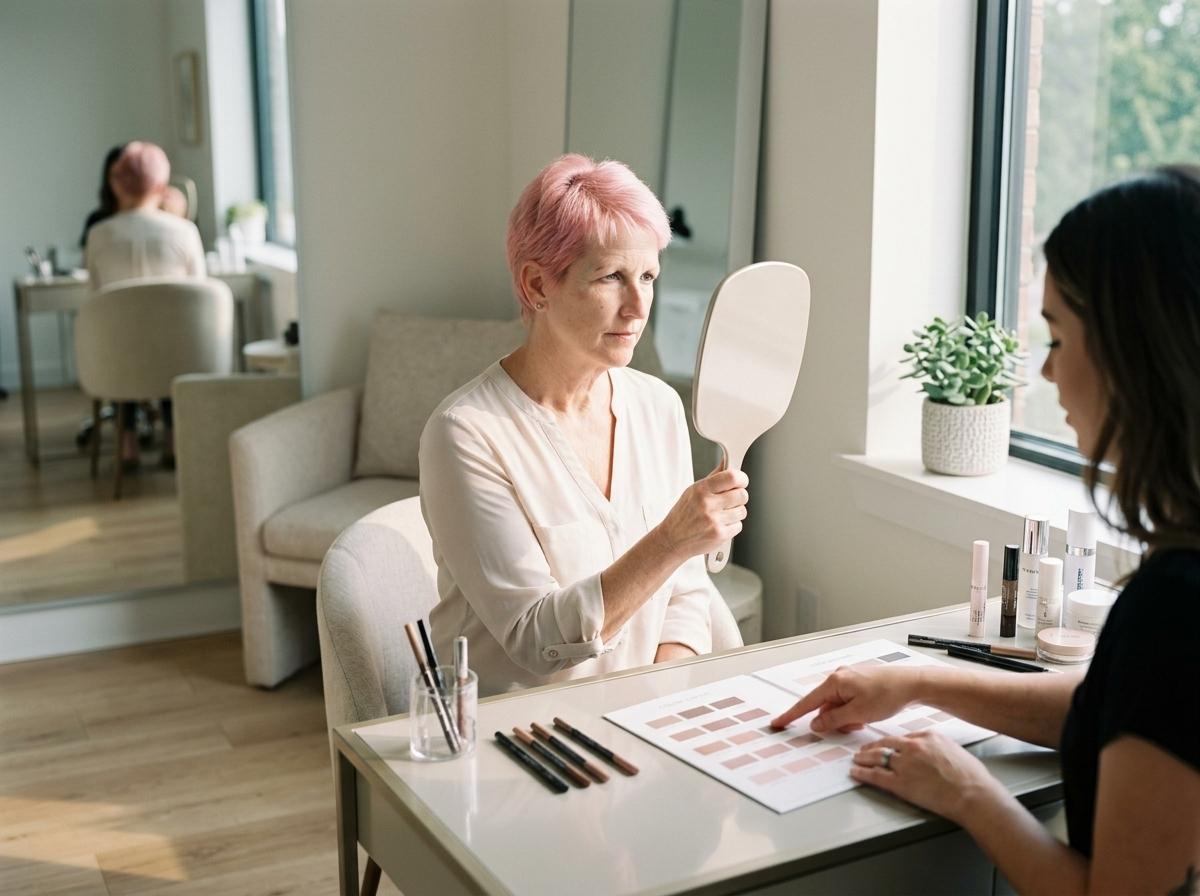
When your permanent makeup shows signs of discolouration, tailored solutions can bring back its natural beauty.
Laser Lightening and Removal
In cases where colour shifts are severe or shape issues persist, laser lightening might be necessary. This method gently breaks down pigment particles, allowing them to fade over time. It’s especially useful for oversaturated areas or where shape corrections are needed. Laser treatment can be a step towards a clean canvas, allowing for a fresh start with new permanent makeup if desired.
Frequently Asked Questions
How often should I get a permanent makeup touch-up?
Touch-ups are typically recommended every 12 to 18 months to maintain vibrancy and shape. This varies based on individual skin type and lifestyle factors.
What can I do if my permanent makeup changes colour?
Colour changes can be addressed through neutralisation, using pigments to balance out unwanted tones. Consulting with a specialist can help determine the best approach.
Can laser treatment completely remove permanent makeup?
Laser treatment can significantly lighten permanent makeup but may not fully remove it. The outcome depends on factors like pigment type and skin characteristics.